

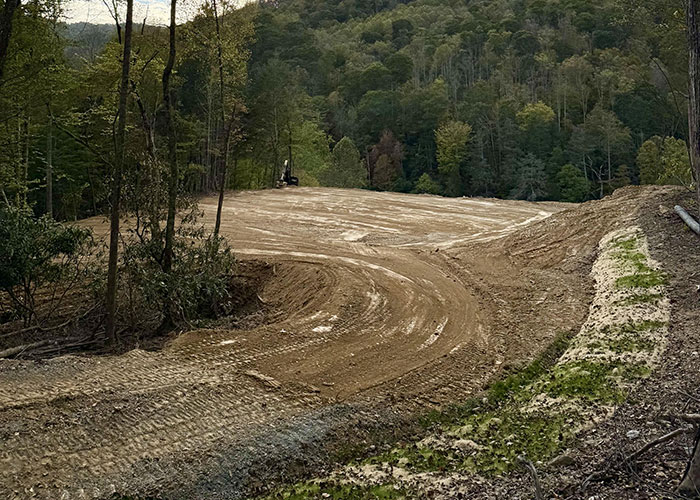
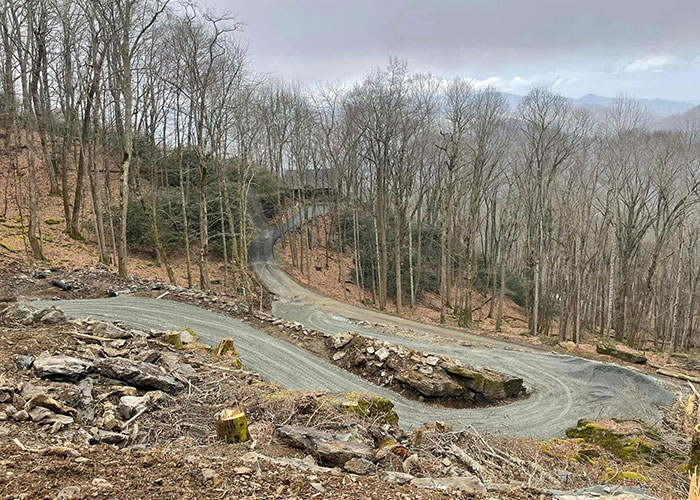
This Carolina Dozer project in Boone, North Carolina combined clearing, grading, driveway installation and surface-water mitigation. Projects that involve several of these scopes are a good example of why mountain site work should be planned as one connected system rather than as a list of unrelated tasks.
On a mountain property, the driveway determines where equipment and vehicles can reach. Grading changes the elevations that control runoff. Clearing removes vegetation that previously slowed water and opens space for construction. Drainage then has to manage the water moving across all of those newly changed surfaces.
If each piece is completed without considering the others, one improvement can create another problem. A driveway cut can intercept hillside runoff. A newly graded area can send more water toward a road. Clearing can expose soil before a safe outlet for stormwater has been created.
Water follows elevation. Once excavation begins, the contractor is effectively changing the drainage map of the property. That is why surface-water mitigation should be considered while the site is being shaped, not after erosion appears.
Ditches, swales, culverts, road pitch and outlet locations can be integrated into the grading so runoff is intercepted and redirected before it gains speed. This is generally more practical than returning later to repair washouts caused by an incomplete drainage plan.
Clearing first creates working room and exposes the existing terrain. Rough grading and driveway construction can then establish access and the main site elevations. As those grades take shape, drainage features can be placed where they fit the actual terrain. Final shaping can then tie the property together.
This sequence also reduces unnecessary equipment movement. The same machines used for clearing, driveway construction and grading can transition between scopes instead of repeatedly mobilizing different contractors.
The objective is a property where the access road, usable ground and drainage support each other. Vehicles need dependable access, runoff needs a controlled path, and finished grades need to be practical for the property’s intended use.
This Boone project reflects the kind of integrated earthwork Carolina Dozer performs throughout the High Country. The reasoning is straightforward: solve the property as a whole. When access, grade and water are planned together, the site is more durable, more usable and easier to maintain after the equipment leaves.
For similar mountain projects, see Carolina Dozer’s Boone excavation services, driveway construction and drainage work.
Related guide: How Surface Water Can Cause Erosion and Landslides.


MEDIA
FAQ’S



.jpg)