

.jpeg)
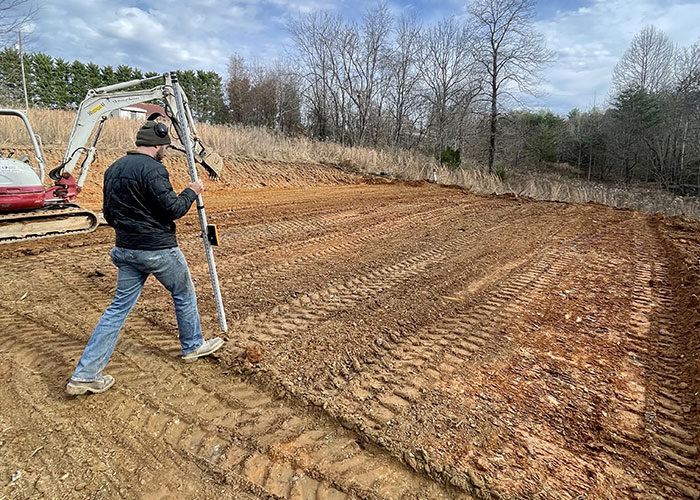
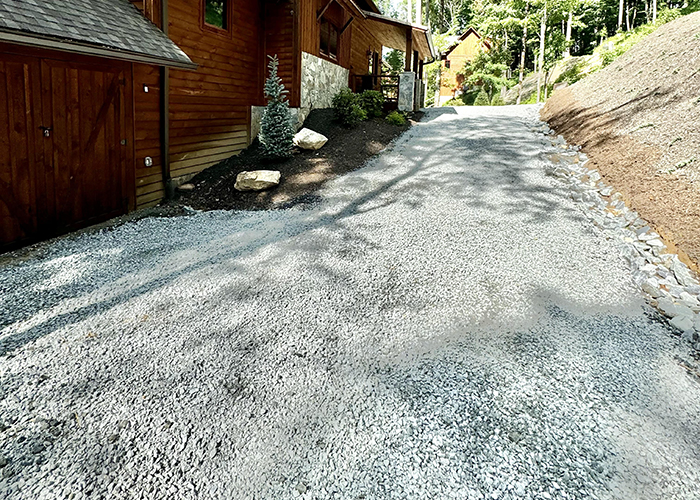
This Blowing Rock, North Carolina project combined grading with retaining-wall-related site work and stabilization. Mountain properties often need retaining structures because the natural elevation change is too great to create usable space with grading alone. The earthwork around the wall is what determines how well that transition functions as part of the property.
On a steep site, flattening one area usually creates a cut on the uphill side, fill on the downhill side, or both. If there is not enough room to taper those slopes naturally, a retaining wall may be part of the solution. The grading contractor has to think about the wall, the ground it retains, the area below it and the water moving through the entire section.
The reason drainage is critical is that soil becomes heavier and more mobile when saturated. Water collecting behind or above a retained area can increase pressure and contribute to erosion around the ends of the wall. Even when the retaining structure itself is handled by another trade, the surrounding grading should not direct uncontrolled runoff into it.
The final elevation of the usable area determines the height and location of the transition. Access for construction equipment and future maintenance also matters. A wall placed without considering finished grades can create awkward slopes, inaccessible areas or drainage paths that are difficult to correct later.
This is why grading and terrace work often accompanies retaining-wall site preparation. Earthwork creates the geometry that the retaining solution must support.
Disturbed mountain soil is vulnerable until vegetation or another protective surface is established. Areas above and below a wall can receive concentrated runoff, especially where the grade changes suddenly. Smoothing those transitions and providing a controlled path for water reduces the chance that erosion begins at the edges of the improvement.
Where a broader bank is unstable, slope and bank stabilization may also be needed. The important distinction is that the wall should not be expected to solve every slope or drainage issue on the property by itself.
The project objective is usable ground connected to the surrounding mountain terrain in a controlled way. The retaining area should support the elevation change, the finished grade should move water appropriately, and adjacent slopes should be shaped so they are practical to stabilize and maintain.
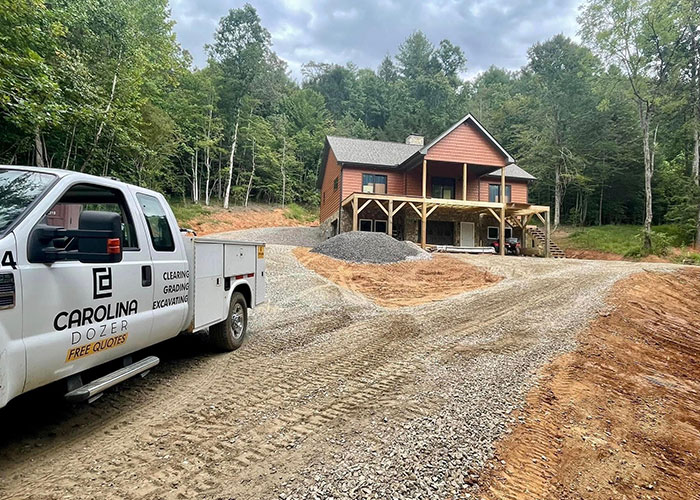
Carolina Dozer performs mountain grading in Blowing Rock with that complete-section approach. The reasoning is to treat the wall, soil, slope and water as parts of the same terrain problem rather than as isolated construction features.
Related guide: How Surface Water Can Cause Erosion and Landslides.


MEDIA
FAQ’S



.jpg)