

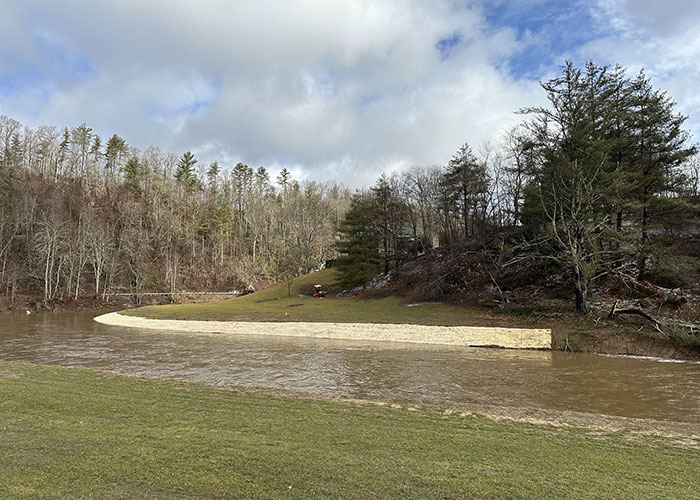
This New River project combined debris removal, erosion control and bank stabilization. River and creek properties are different from ordinary grading sites because the force that caused the damage may still be active. High water can remove soil, deposit debris, undercut banks and change the shape of the channel or adjoining property in a short period of time.
A common mistake with erosion repair is to focus only on replacing missing soil. If the bank is rebuilt to the same vulnerable shape and water continues striking it in the same way, the repair can erode again. The first question is therefore not simply how much material was lost, but how water is moving through and along the site.
Debris also affects the work. Storm material can block access, redirect flow or hide the true condition of the bank. Removing unstable or obstructive material gives the contractor a clearer picture of the area that actually needs to be reshaped and stabilized.
Steep, loose banks are more vulnerable to sloughing and scour. Reshaping the bank can reduce that vulnerability by creating a more practical transition between the upper property and the water’s edge. Where stone is used, its purpose is not cosmetic; it provides mass and surface protection in areas exposed to concentrated flow or repeated wetting.
This is why riverbank reclamation often overlaps with slope and bank stabilization. The finished bank has to support the soil above it while also dealing with the hydraulic forces below it.
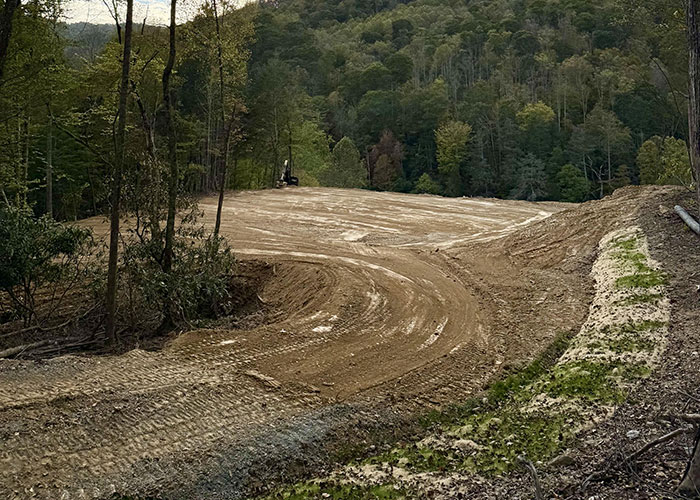
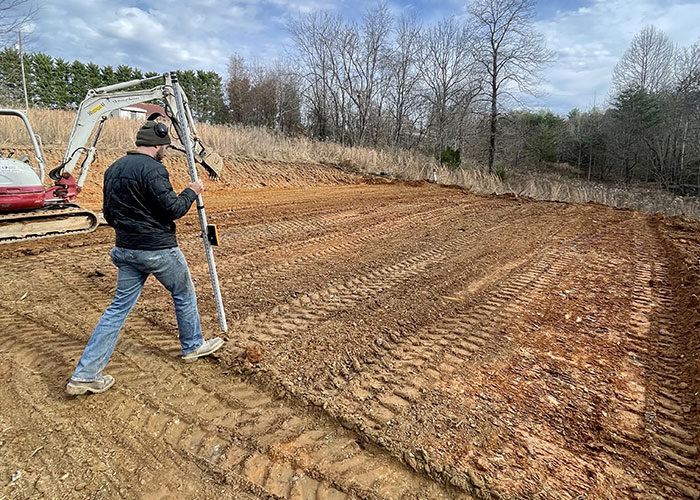
Access and debris removal come first so equipment can safely reach the affected area. The failed or irregular bank can then be evaluated and reshaped. Stone or other stabilization can be placed where the site needs protection, and disturbed upper areas can be graded so surface runoff is not concentrated back onto the repaired bank.
That last point is important. River erosion can be worsened by stormwater coming from the property itself. A bank may be receiving pressure from the river at the bottom and runoff from the yard or slope at the top. Addressing only one side leaves part of the problem unresolved.
The objective is to leave a cleaner, more stable bank with a shape and surface that are better suited to the site’s water conditions. No riverbank can be made immune to extreme events, but thoughtful grading, cleanup and stabilization can reduce vulnerable conditions and help the property recover from prior damage.
Carolina Dozer performs erosion and riverbank work throughout Western North Carolina, combining heavy-equipment access, grading, stone placement and erosion repair into a site-specific approach rather than treating every washed-out bank the same.
Related guide: Riprap vs. Clean Stone for Erosion Control.


MEDIA
FAQ’S

.jpeg)


.jpg)