

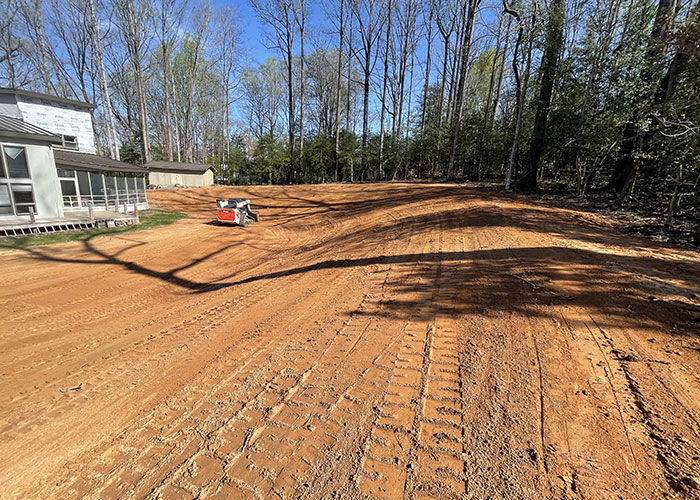
This Wilkesboro, North Carolina project combined backyard grading with tree removal. Residential grading projects often look simple from the finished photo, but the real work is deciding what needs to be removed, where the soil should move, how the final elevations should transition into the rest of the yard, and where stormwater will go after the property is reshaped.
When trees and established vegetation are removed, the shape of the yard becomes easier to change—but the roots and canopy that previously slowed runoff are also gone. That means the final grade becomes more important. A flatter-looking backyard is only an improvement if it still drains properly and does not create low spots or direct water toward structures.
The reasoning behind combining tree removal and grading is efficiency. Trees, roots and stumps can prevent the equipment from reaching the correct elevations. Removing those obstacles first allows the ground to be reshaped continuously instead of grading around features that are going to be removed later.
Residential grading is rarely about creating one perfectly flat plane. The finished area has to transition into existing slopes, neighboring ground, driveway elevations and the house. Sudden changes in grade can create erosion points, mowing problems or water collection. Gentle, deliberate transitions are usually more functional and easier to maintain.
This is why grading and terrace work is as much about water and usability as appearance. The best finished grade is one that looks natural while quietly moving runoff where it belongs.
Tree and brush removal opens the work area. Stumps and unsuitable material can then be addressed before rough grading begins. Once the basic shape is established, the site can be refined so the surface sheds water and is ready for lawn, landscaping or another improvement.
Doing that work in the wrong order creates rework. Finish grading before stump removal, for example, often means disturbing the same ground again. Coordinating clearing and grading reduces that duplication.
The goal of a project like this is not simply to move dirt. It is to create a backyard that is easier to use, easier to maintain and better connected to the rest of the property. That may mean opening sightlines, increasing usable lawn area, improving drainage or preparing space for future landscaping.
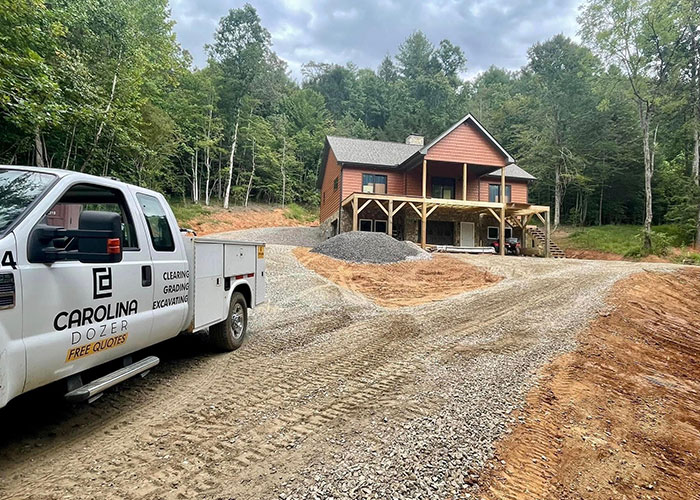
Carolina Dozer handles excavation and grading in Wilkesboro with the same basic principle: the finished shape should solve a practical problem. A visually clean yard is valuable, but a clean yard that also drains correctly and supports future use is the real objective.
Related guide: Understanding the Cost of Grading, Excavating, and Land Clearing.


MEDIA
FAQ’S

.jpeg)


.jpg)