

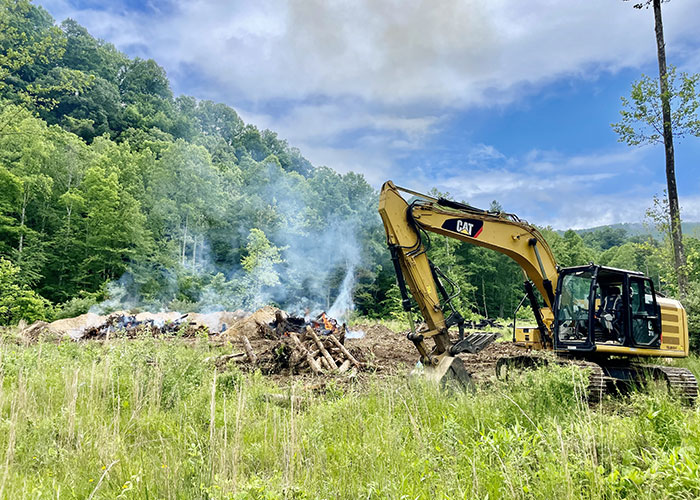
This Boone, North Carolina project involved clearing approximately 12 acres of mountain property. At that scale, clearing is not just a matter of removing trees and brush. The work has to be thought through in terms of equipment access, how material will be handled, what portions of the property need to remain usable during the work, and what the owner plans to do with the site afterward.
Large-acreage clearing can expose steep ground, concentrate runoff and make future grading more difficult if vegetation is removed without considering the next phase. On mountain property, the cleared land still has to drain, equipment still needs dependable access, and stumps or debris cannot be left where future roads, pads or building areas may need to go.
The reason Carolina Dozer approaches this type of project as site development rather than simple vegetation removal is that clearing changes the way the property functions. Once trees, roots and brush are removed, water can move faster across exposed soil. Access routes also become more important because every future trade will use the paths created during the clearing phase.
Keeping land clearing, site preparation, grading and access planning coordinated reduces unnecessary remobilization and helps prevent work from being done twice. Areas intended for future roads, homesites or staging can be treated differently from portions of the property that only need selective clearing.
That sequencing is especially important on a 12-acre site. A contractor needs to think beyond the individual tree being removed and consider the movement of machines, the location of debris, turning room, slope transitions and where disturbed ground may need follow-up stabilization.
The practical goal was to leave the property more useful for its next phase, not simply more open. That means maintaining workable access, avoiding unnecessary disturbance, and keeping future excavation and grading in mind while clearing proceeds. When the same contractor can continue into driveway work, pad preparation or drainage, decisions made during clearing can support those later phases instead of conflicting with them.
For owners considering large-scale clearing in Boone or the surrounding High Country, the main question should not only be how many acres need to be opened. It should also be what the property needs to become afterward. A recreational tract, future homesite, road corridor and commercial site all require different clearing priorities.
Carolina Dozer handles large-acreage excavation and grading in Boone with that next-step mindset. When clearing is treated as the first phase of site development, the finished property is easier to grade, easier to access and better prepared for future construction or improvement.
Related guide: How to Prepare a Mountain Homesite for Construction.


MEDIA
FAQ’S




.jpg)