

.jpeg)
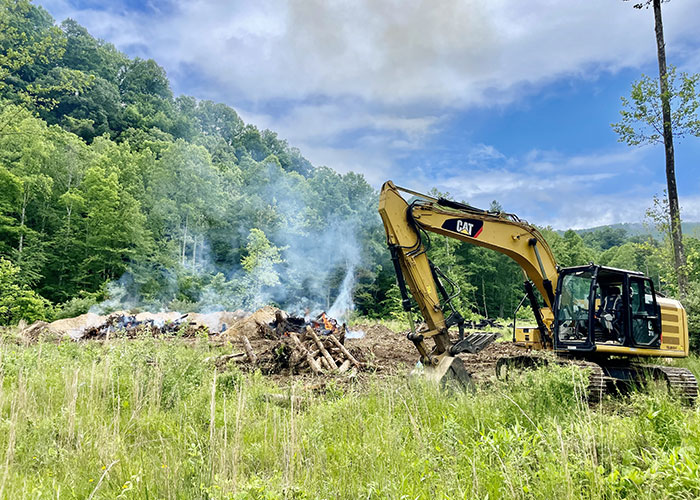
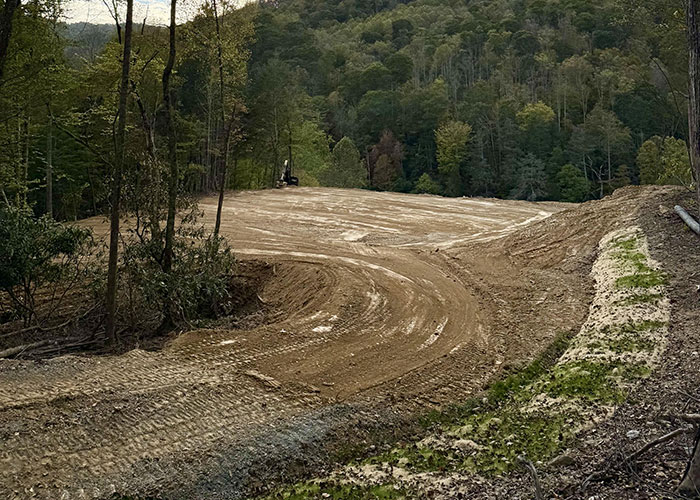
This Purlear, North Carolina project involved commercial-use site work with clearing, grading and compaction. Commercial earthwork is different from simply making a property look level. The finished area has to support repeated vehicle or equipment use, connect logically to access points and shed water without allowing traffic to deform the surface.
Any commercial-use surface has to perform under load. If unsuitable topsoil or loose material remains beneath the working area, the surface can rut or settle even when the top looks smooth. The reason compaction matters is that the support for the finished site comes from the material below it, not from the appearance of the final grade.
Clearing is part of that same process. Vegetation, roots and organic material can interfere with grading and create weak zones. Removing obstacles and exposing the underlying ground allows the site to be evaluated and shaped more consistently.
A commercial pad or equipment area needs enough slope to move stormwater but not so much slope that parking, loading or equipment use becomes difficult. The grade also has to tie into surrounding terrain so runoff does not collect along the edge of the working area or discharge onto an unstable bank.
That is why grading and surface-water management are considered together. Water standing on or beneath a heavily trafficked surface can soften the base and shorten the life of the site.
The logical progression is to clear the work zone, remove or address unsuitable material, establish rough elevations, place and compact material in a controlled way and then refine the surface so it drains. Access has to remain part of the plan throughout, especially if trucks or heavy equipment will use the site regularly.
Coordinating site preparation, excavation and grading under one scope also helps avoid having one contractor undo the work of another.
The finished goal is a practical, stable commercial-use site that supports the intended activity and can be maintained without constant reshaping. Good commercial earthwork should feel uneventful after completion: vehicles can enter, turn and operate, water leaves the surface, and the ground does not continually pump, rut or settle under normal use.
Carolina Dozer is based in Purlear and handles commercial excavation and grading in Purlear and throughout Wilkes County. Local access to equipment and material hauling is especially useful for commercial projects where the work often has to be completed in several coordinated phases.
Related guide: Understanding the Cost of Grading, Excavating, and Land Clearing.


MEDIA
FAQ’S



.jpg)